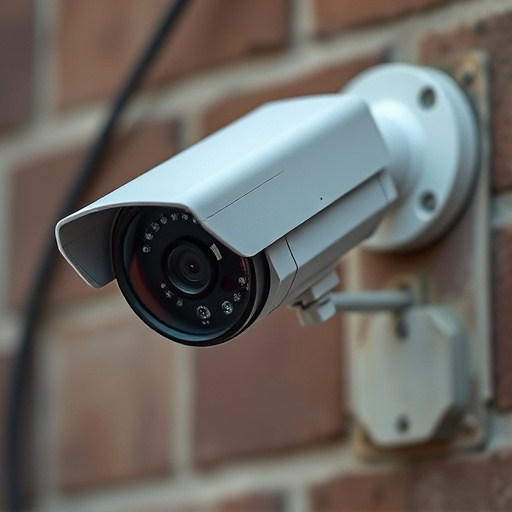
Understanding the strategic placement of fake security cameras is crucial for effective crime prevention. With adjustable mounts, these simulated cameras can cover more ground and signal comprehensive monitoring, deterring intruders by creating an illusion of constant surveillance. Optimal mounting heights, between 5-7 feet, balance field of view and environmental conditions like lighting and obstructions, ensuring clear images without compromising privacy. Correct installation techniques, including natural surroundings and strategic angles at eye level, maximize their deterrent effect.
In today’s world of advanced technology, fake security cameras offer a cost-effective way to enhance home or business safety. However, proper placement is key for optimal effectiveness. This guide delves into understanding fake security camera placement angles and factors influencing mounting height decisions. Learn best practices for achieving comprehensive coverage and deterrence, as well as common mistakes to avoid during installation. Optimize your security setup with these essential insights on fake security camera placement angles.
- Understanding Fake Security Camera Placement Angles
- Factors Influencing Mounting Height Decisions
- Best Practices for Optimal Coverage and Deterrence
- Common Mistakes to Avoid in Fake Camera Installation
Understanding Fake Security Camera Placement Angles
When discussing fake security camera mounting, understanding placement angles is paramount. While real security cameras often have specific requirements for line-of-sight and coverage, their faux counterparts operate under different principles. Fake security cameras are designed to mimic genuine installations, but their primary function is deterrence rather than surveillance. As such, they can be strategically placed at various angles to create the illusion of comprehensive monitoring without needing optimal view lines.
These simulated cameras often feature adjustable mounts that allow for creative positioning. Mounting them at different heights and angles—from upright to tilted—can help deter potential intruders by signaling that every corner of a property is under observation. This strategic placement also enables them to cover more ground, making it difficult for criminals to find blind spots where they might attempt to conceal their activities.
Factors Influencing Mounting Height Decisions
When determining the optimal mounting height for a fake security camera, several factors come into play. The primary consideration is the desired field of view—how much area you want to monitor. This influences both the vertical and horizontal placement angles. For instance, a lower mount captures a wider angle but may result in a distorted image at the edges, while a higher position offers greater clarity but limits coverage.
Another crucial aspect is lighting conditions. In well-lit areas, cameras can function effectively at lower heights, whereas in darker environments, raising the camera might be necessary to ensure adequate illumination and clear visuals. Moreover, the type of camera and its lens play a role; telephoto lenses require higher mounts for optimal performance compared to wide-angle options. Environmental factors like tree lines or building obstructions also dictate mounting height to ensure unobstructed surveillance.
Best Practices for Optimal Coverage and Deterrence
To maximize the effectiveness of fake security cameras, it’s crucial to consider their placement angles and mounting heights. Best practices for optimal coverage and deterrence involve positioning them at strategic locations that offer wide-angle views while maintaining a natural aesthetic. Mounting the cameras at heights between 5 to 7 feet (1.5 to 2.1 meters) off the ground is generally recommended, as this range provides a balanced view without raising privacy concerns.
When selecting camera placement angles, aim for positions that capture key entry points, such as doors, windows, and loading areas. Additionally, ensuring visibility of paths leading to these points creates a comprehensive surveillance network. Remember that fake security cameras should be placed where they are visible but not overly obtrusive, acting as a subtle deterrent to potential intruders while providing peace of mind for property owners.
Common Mistakes to Avoid in Fake Camera Installation
When installing fake security cameras, making simple mistakes can render them ineffective or even comical. One of the most common blunders is incorrect placement angles. Cameras should be positioned at eye level to appear realistic and deter potential intruders. Avoid mounting them too high or too low—a general rule is to place them 1-2 feet above eye level for optimal effect.
Another mistake is neglecting to consider the surrounding environment. Cameras must align with their surroundings; a camera mounted on a bare wall will stand out. Ensure natural elements like plants, decorations, or even other security cameras are present nearby for a convincing setup. Avoid predictable patterns too, such as lining up multiple fake cameras in a straight line—intruders can quickly identify these as fakes.
In conclusion, a well-placed fake security camera can significantly enhance real camera deterrence and overall home or business security. By understanding optimal placement angles and factors influencing height decisions, you can ensure maximum coverage and effectiveness. Avoiding common installation mistakes will further strengthen your security measures. Remember, the key to success lies in proper Fake Security Camera Placement Angles tailored to your specific needs.